

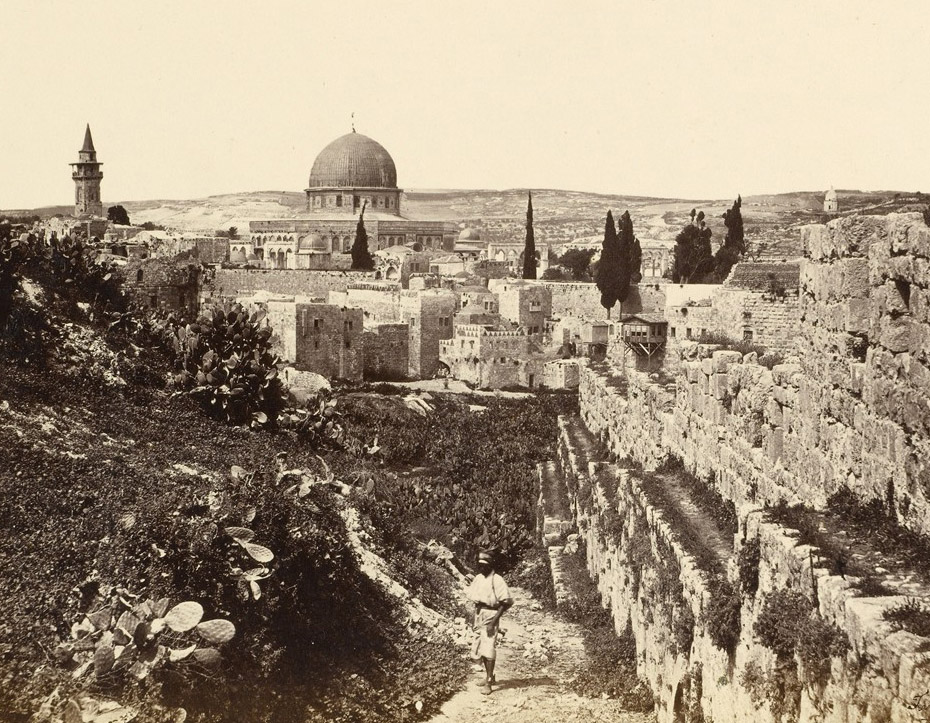
Al-Masjid al-Aqṣā During the Umayyad
Al-Masjid al-Aqṣā During the Umayyad Era (661–750 CE)
Following the conquest of al-Quds (Jerusalem) during the caliphate of ʿUmar ibn al-Khaṭṭāb (RA) and throughout the era of the Ṣaḥābah (the Companions of the Prophet ﷺ), which lasted for more than twenty years, the regions of al-Shām (Greater Syria) and Miṣr (Egypt) experienced a period of remarkable stability and prosperity. This era witnessed notable advancements in knowledge, culture, the arts, architecture, urban development, and economic life. Naturally, al-Quds, the jewel of bilād al-Shām, shared in these developments and flourished.
The Umayyad period continued and expanded this trajectory of growth. The Umayyad caliphs showed exceptional attention to this blessed land, leaving some of their most magnificent architectural and cultural achievements here between 41–132 AH (661–750 CE).
During the reign of Caliph ʿAbd al-Malik ibn Marwān, the entire ḥaram complex of al-Masjid al-Aqṣā was effectively reconstructed from the ground up. The Dome of the Chain (Qubbat al-Silsilah) was first erected as a prototype model, serving as a reference for the construction of the Dome of the Rock (Qubbat al-Ṣakhrah). Although ʿAbd al-Malik passed away before the completion of the works, construction continued under his son, Caliph al-Walīd ibn ʿAbd al-Malik, who oversaw the finalization of the project and the completion of the Qibli Mosque (al-Masjid al-Qiblī), which was then opened for worship.
After al-Walīd, his brother Caliph Sulaymān ibn ʿAbd al-Malik undertook major initiatives to develop the cities of Palestine, beginning with Ramla, which he made his new administrative center. These projects brought about a revival of culture, art, and architecture throughout the region. The works carried out in al-Quds and across Palestine gained admiration not only within the Muslim world but also beyond. The construction of palatial complexes on the southern flank of al-Masjid al-Aqṣā during this time reflected the Umayyad Caliphate’s growing centralization and administrative needs.
The city also experienced a cultural and intellectual vibrancy, with visits from neighboring rulers, emirs, and eminent figures known for their scholarship and artistry. Pilgrims—both Christian pilgrims on their way to the holy sites and Muslims settling in the city from different regions—contributed to a significant increase in Jerusalem’s population.
However, some of these great Umayyad structures suffered serious damage during the devastating earthquake that struck towards the end of the Umayyad rule. Despite this, the Umayyad legacy in al-Quds remains a defining chapter in the city’s history, marking a period of renewal, architectural brilliance, and cultural vitality.